
Geoffrey Chaucer quotes
-
“What is better than wisdom? Woman. And what is better than a good woman? Nothing.”
-- Geoffrey ChaucerSource : Geoffrey Chaucer, Thomas Tyrwhitt (1830). “The Canterbury Tales of Chaucer: With an Essay on His Language and Versification, an Introductory Discourse, Notes, and a Glossary by Tho. Tyrwhitt”, p.94
-
“The lyf so short, the craft so long to lerne.”
-- Geoffrey ChaucerSource : The Parliament of Fowls l. 1 (1380 - 1386)
-
“Every honest miller has a golden thumb.”
-- Geoffrey Chaucer -
“That he is gentil that doth gentil dedis.”
-- Geoffrey Chaucer -
-
“There was the murdered corpse, in covert laid, And violent death in thousand shapes displayed; The city to the soldier's rage resigned; Successless wars, and poverty behind; Ships burnt in fight, or forced on rocky shores, And the rash hunter strangled by the boars; The newborn babe by nurses overlaid; And the cook caught within the raging fire he made.”
-- Geoffrey Chaucer -
“If no love is, O God, what fele I so? And if love is, what thing and which is he? If love be good, from whennes cometh my woo? If it be wikke, a wonder thynketh me”
-- Geoffrey Chaucer -
“One flesh they are; and one flesh, so I'd guess, Has but one heart, come grief or happiness.”
-- Geoffrey Chaucer -
“Yet do not miss the moral, my good men. For Saint Paul says that all that’s written well Is written down some useful truth to tell. Then take the wheat and let the chaff lie still.”
-- Geoffrey Chaucer -
-
“Patience is a conquering virtue.”
-- Geoffrey ChaucerSource : Geoffrey Chaucer (1966). “The Canterbury Tales”
-
“The life so brief, the art so long in the learning, the attempt so hard, the conquest so sharp, the fearful joy that ever slips away so quickly - by all this I mean love, which so sorely astounds my feeling with its wondrous operation, that when I think upon it I scarce know whether I wake or sleep.”
-- Geoffrey Chaucer -
“Filth and old age, I'm sure you will agree, are powerful wardens upon chastity.”
-- Geoffrey Chaucer -
“Love will not be constrain'd by mastery. When mast'ry comes, the god of love anon Beateth his wings, and, farewell, he is gone. Love is a thing as any spirit free.”
-- Geoffrey Chaucer -
-
“Death is the end of every worldly pain.”
-- Geoffrey Chaucer -
“Certain, when I was born, so long ago, Death drew the tap of life and let it flow; And ever since the tap has done its task, And now there's little but an empty cask.”
-- Geoffrey Chaucer -
“Nature, the vicar of the Almighty Lord.”
-- Geoffrey Chaucer -
-
“The smylere with the knyf under the cloke.”
-- Geoffrey Chaucer -
“To keep demands as much skill as to win.”
-- Geoffrey Chaucer -
“And brought of mighty ale a large quart.”
-- Geoffrey Chaucer -
“The proverbe saith that many a smale maketh a grate.”
-- Geoffrey Chaucer -
-
“For thogh we slepe, or wake, or rome, or ryde, Ay fleeth the tyme; it nyl no man abyde.”
-- Geoffrey Chaucer -
“Yblessed be god that I have wedded fyve! Welcome the sixte, whan that evere he shal.”
-- Geoffrey Chaucer -
“Women desire six things: They want their husbands to be brave, wise, rich, generous, obedient to wife, and lively in bed.”
-- Geoffrey Chaucer -
“The guilty think all talk is of themselves.”
-- Geoffrey ChaucerSource : Geoffrey Chaucer (1966). “The Canterbury Tales”
-
-
“For out of old fields, as men saith, Cometh all this new corn from year to year; And out of old books, in good faith, Cometh all this new science that men learn.”
-- Geoffrey Chaucer -
“To maken vertue of necessite.”
-- Geoffrey Chaucer -
“One cannot scold or complain at every word. Learn to endure patiently, or else, as I live and breathe, you shall learn it whether you want or not.”
-- Geoffrey Chaucer -
“Certes, they been lye to hounds, for an hound when he cometh by the roses, or by other bushes, though he may nat pisse, yet wole he heve up his leg and make a countenance to pisse.”
-- Geoffrey Chaucer -
-
“One cannot be avenged for every wrong; according to the occasion, everyone who knows how, must use temperance.”
-- Geoffrey Chaucer -
“For there is one thing I can safely say: that those bound by love must obey each other if they are to keep company long. Love will not be constrained by mastery; when mastery comes, the God of love at once beats his wings, and farewell he is gone. Love is a thing as free as any spirit; women naturally desire liberty, and not to be constrained like slaves; and so do men, if I shall tell the truth.”
-- Geoffrey ChaucerSource : Geoffrey Chaucer (2006). “The Canterbury Tales”, p.451, Bantam Classics
-
“The cat would eat fish but would not get her feet wet.”
-- Geoffrey Chaucer -
-
“Look up on high, and thank the God of all.”
-- Geoffrey Chaucer -
“First he wrought, and afterwards he taught.”
-- Geoffrey Chaucer -
“The handsome gifts that fate and nature lend us Most often are the very ones that end us.”
-- Geoffrey Chaucer -
“If love be good, from whence cometh my woe?”
-- Geoffrey Chaucer -
-
“Thou shalt make castels thanne in Spayne And dreme of joye, all but in vayne.”
-- Geoffrey Chaucer -
“For many a pasty have you robbed of blood, And many a Jack of Dover have you sold That has been heated twice and twice grown cold. From many a pilgrim have you had Christ's curse, For of your parsley they yet fare the worse, Which they have eaten with your stubble goose; For in your shop full many a fly is loose.”
-- Geoffrey Chaucer -
“Woe to the cook whose sauce has no sting.”
-- Geoffrey Chaucer -
“But, Lord Crist! whan that it remembreth me Upon my yowthe, and on my jolitee, It tickleth me aboute myn herte roote. Unto this day it dooth myn herte boote That I have had my world as in my tyme. But age, alias! that al wole envenyme, Hath me biraft my beautee and my pith. Lat go, farewel! the devel go therwith! The flour is goon, ther is namoore to telle; The bren, as I best kan, now most I selle.”
-- Geoffrey Chaucer -
-
“Whan that Aprill with his shoures soote The droghte of March hath perced to the roote.”
-- Geoffrey Chaucer -
“With emptie hands men may no haukes lure.”
-- Geoffrey Chaucer -
-
“Felds hath eyen, and wode have eres.”
-- Geoffrey Chaucer -
“Great peace is found in little busy-ness.”
-- Geoffrey Chaucer -
“Men sholde nat knowe of Goddes pryvetee Ye, blessed be alwey, a lewed man That noght but oonly his believe kan! So ferde another clerk with astromye, He walked in the feelds, for to prye Upon the sterres, what ther sholde bifalle, Til he was in a marle-pit yfalle.”
-- Geoffrey Chaucer -
-
“If a man really loves a woman, of course he wouldn't marry her for the world if he were not quite sure that he was the best person she could possibly marry.”
-- Geoffrey Chaucer -
“Or as an ook comth of a litel spir, So thorugh this lettre, which that she hym sente, Encressen gan desir, of which he brente.”
-- Geoffrey Chaucer -
“I hold a mouses wit not worth a leke, That hath but on hole for to sterten to.”
-- Geoffrey Chaucer -
“Of harmes two the lesse is for to cheese.”
-- Geoffrey Chaucer -
-
“Go, little booke! go, my little tragedie!”
-- Geoffrey Chaucer -
“He that loveth God will do diligence to please God by his works, and abandon himself, with all his might, well for to do.”
-- Geoffrey Chaucer -
-
“That of all the floures in the mede, Thanne love I most these floures white and rede, Suche as men callen daysyes in her toune.”
-- Geoffrey Chaucer -
“For I have seyn of a ful misty morwe Folowen ful ofte a myrie someris day.”
-- Geoffrey Chaucer -
“Ther is no newe gyse that it nas old.”
-- Geoffrey Chaucer -
“The bisy larke, messager of day.”
-- Geoffrey Chaucer -
-
“Til that the brighte sonne loste his hewe; For th'orisonte hath reft the sonne his lyght; This is as muche to seye as it was nyght!”
-- Geoffrey Chaucer -
“Eke wonder last but nine deies never in toun.”
-- Geoffrey Chaucer -
“And she was fair as is the rose in May.”
-- Geoffrey Chaucer -
You may also like:
-
Alfred Lord Tennyson
Poet -
Charles Dickens
Writer -
Christine de Pizan
Author -
Dante Alighieri
Poet -
Edmund Spenser
Poet -
George Eliot
Novelist -
Giovanni Boccaccio
Author -
John Gower
Poet -
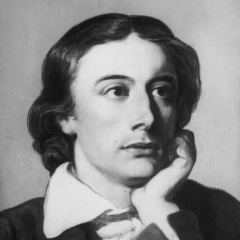
John Keats
Poet -
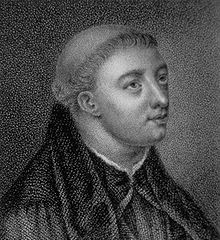
John Lydgate
Poet -
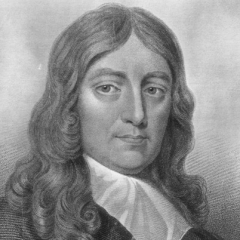
John Milton
Poet -
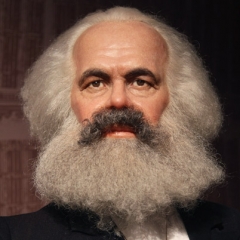
Karl Marx
Philosopher -
Miguel de Cervantes
Novelist -
Petrarch
Poet -
Thomas Becket
Saint -
Thomas More
Saint -

William Caxton
Writer -

William Shakespeare
Poet -
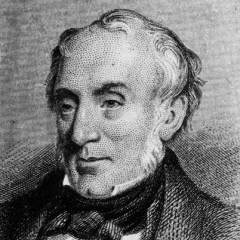
William Wordsworth
Poet