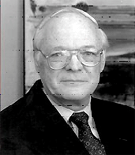
Peter Lynch quotes
-
“It's human nature to keep doing something as long as it's pleasurable and you can succeed at it, which is why the world population continues to double every 40 years.”
-- Peter Lynch -
“If you're prepared to invest in a company, then you ought to be able to explain why in simple language that a fifth grader could understand, and quickly enough so the fifth grader won't get bored.”
-- Peter Lynch -
“The person that turns over the most rocks wins the game. And that's always been my philosophy.”
-- Peter Lynch -
“In stocks as in romance, ease of divorce is not a sound basis for commitment.”
-- Peter Lynch -
-
“If you spend more than 13 minutes analyzing economic and market forecasts, you've wasted 10 minutes”
-- Peter Lynch -
“A stock market decline is as routine as a January blizzard in Colorado. If you're prepared, it can't hurt you. A decline is a great opportunity to pick up the bargains left behind by investors who are fleeing the storm in panic.”
-- Peter Lynch -
“Although it's easy to forget sometimes, a share is not a lottery ticket... it's part-ownership of a business.”
-- Peter Lynch -
“Hold no more stocks than you can remain informed on.”
-- Peter Lynch -
-
“Behind every stock is a company. Find out what it's doing.”
-- Peter LynchSource : Peter Lynch (2012). “Beating the Street”, p.305, Simon and Schuster
-
“Searching for companies is like looking for grubs under rocks: if you turn over 10 rocks you'll likely find one grub; if you turn over 20 rocks you'll find two.”
-- Peter Lynch -
“The best stock to buy is the one you already own.”
-- Peter Lynch -
“All you need for a lifetime of successful investing is a few big winners, and the pluses from those will overwhelm the minuses from the stocks that don't work out.”
-- Peter Lynch -
-
“The real key to making money in stocks is not to get scared out of them.”
-- Peter LynchSource : Peter Lynch (2012). “Beating the Street”, p.36, Simon and Schuster
-
“Know what you own, and know why you own it.”
-- Peter Lynch -
“There's a company behind every stock and a reason companies - and their stocks - perform the way they do.”
-- Peter Lynch -
“When stocks are attractive, you buy them. Sure, they can go lower. I've bought stocks at $12 that went to $2, but then they later went to $30. You just don't know when you can find the bottom.”
-- Peter Lynch -
-
“Go for a business that any idiot can run - because sooner or later, any idiot probably is going to run it.”
-- Peter Lynch -
“If you can find a company that can get away with raising prices year after year without losing customers (an addictive product such as cigarettes fills the bill), you've got a terrific investment.”
-- Peter Lynch -
“There is always something to worry about. Avoid weekend thinking and ignoring the latest dire predictions of the newscasters. Sell a stock because the company's fundamentals deteriorate, not because the sky is falling.”
-- Peter Lynch -
“It would be wonderful if we could avoid the setbacks with timely exits, but nobody has figured out how to predict them.”
-- Peter Lynch -
-
“Thousands of experts study overbought indicators, oversold indicators, head-and-shoulder patterns, put-call ratios, the Fed's policy on money supply, foreign investment, the movement of the constellations through the heavens, and the moss on oak trees, and they can't predict markets with any useful consistency, any more than the gizzard squeezers could tell the Roman emperors when the Huns would attack.”
-- Peter Lynch -
“During the Gold Rush, most would-be miners lost money, but people who sold them picks, shovels, tents and blue-jeans (Levi Strauss) made a nice profit.”
-- Peter Lynch -
“You have to keep your priorities straight if you plan to do well in stocks.”
-- Peter Lynch -
“When you start to confuse Freddie Mac, Sallie Mae and Fannie Mae with members of your family, and you remember 2,000 stock symbols but forget the children's birthdays, there's a good chance you've become too wrapped up in your work.”
-- Peter Lynch -
-
“Equity mutual funds are the perfect solution for people who want to own stocks without doing their own research.”
-- Peter Lynch -
“There's no shame in losing money on a stock. Everybody does it. What is shameful is to hold on to a stock, or worse, to buy more of it when the fundamentals are deteriorating.”
-- Peter Lynch -
“In the long run, a portfolio of well chosen stocks and/or equity mutual funds will always outperform a portfolio of bonds or a money-market account. In the long run, a portfolio of poorly chosen stocks won't outperform the money left under the mattress.”
-- Peter Lynch -
“Time is on your side when you own shares of superior companies.”
-- Peter Lynch -
-
“Never invest in any idea you can't illustrate with a crayon”
-- Peter LynchSource : Peter Lynch (2012). “Beating the Street”, p.27, Simon and Schuster
-
“I think you have to learn that there's a company behind every stock, and that there's only one real reason why stocks go up. Companies go from doing poorly to doing well or small companies grow to large companies.”
-- Peter Lynch -
“Owning stocks is like having children - don't get involved with more than you can handle.”
-- Peter Lynch -
“You can't see the future through a rearview mirror”
-- Peter Lynch -
-
“If you can't find any companies that you think are attractive, put your money in the bank until you discover some.”
-- Peter LynchSource : Peter Lynch (2012). “Beating the Street”, p.306, Simon and Schuster
-
“The most important organ in the body as far as the stock market is concerned is the guts, not the head. Anyone can acquire the know-how for analyzing stocks.”
-- Peter Lynch -
“Everyone has the brainpower to make money in stocks. Not everyone has the stomach. If you are susceptible to selling everything in a panic, you ought to avoid stocks and mutual funds altogether.”
-- Peter Lynch -
“All the math you need in the stock market you get in the fourth grade.”
-- Peter LynchSource : Peter Lynch (2012). “One Up On Wall Street: How To Use What You Already Know To Make Money In”, p.49, Simon and Schuster
-
-
“If a picture is worth a thousand words, in business, so is a number.”
-- Peter Lynch#Numbers Quotes #Investing Quotes #Picture Is Worth A Thousand Words Quotes
-
“Imagine if you borrowed your parents' car without permission and ran it into a tree, how much better you'd feel if you were incorporated.”
-- Peter Lynch -
“The junior high schools and high schools of America have forgotten to teach one of the most important courses of all. Investing.”
-- Peter Lynch -
-
“In our society, it's been the men who've handled most of the finances, and the women who've stood by and watched men botch things up.”
-- Peter Lynch -
“If you have the stomach for stocks, but neither the time nor the inclination to do the homework, invest in equity mutual funds.”
-- Peter Lynch -
“Most investors would be better off in an index fund.”
-- Peter Lynch -
“Suicide is a permanent solution to a temporary problem. Suicide is a choice and I think if we work with that with kids, we'll get somewhere.”
-- Peter Lynch -
-
“Improved turnout will give parliament and government the appearance of being more legitimate.”
-- Peter Lynch -
“I don't go near the money and the money doesn't go near me.”
-- Peter Lynch -
“When management owns stock, then rewarding the shareholders becomes a first priority, whereas when management simply collects a paycheck, then increasing salaries becomes a first priority.”
-- Peter Lynch -
“What makes stocks valuable in the long run isn't the market. It's the profitability of the shares in the companies you own. As corporate profits increase, corporations become more valuable and sooner or later, their shares will sell for a higher price.”
-- Peter Lynch -
-
“Just because you buy a stock and it goes up does not mean you are right. Just because you buy a stock and it goes down does not mean you are wrong.”
-- Peter Lynch -
“Nobody can predict interest rates, the future direction of the economy or the stock market. Dismiss all such forecasts and concentrate on what's actually happening to the companies in which you've invested”
-- Peter LynchSource : Peter Lynch (2012). “Beating the Street”, p.307, Simon and Schuster
-
“There's no use diversifying into unknown companies just for the sake of diversity. A foolish diversity is the hobgoblin of small investors. That said, it isn't safe to own just one stock, because in spite of your best efforts, the one you choose might be the victim of unforeseen circumstances. In small portfolios, I'd be comfortable owning between three and ten stocks.”
-- Peter LynchSource : Peter Lynch (2012). “One Up On Wall Street: How To Use What You Already Know To Make Money In”, p.240, Simon and Schuster
-
“Investing in stocks is an art, not a science, and people who've been trained to rigidly quantify everything have a big disadvantage.”
-- Peter LynchSource : Peter Lynch (2012). “One Up On Wall Street: How To Use What You Already Know To Make Money In”, p.49, Simon and Schuster
-
You may also like:
-
Benjamin Graham
Investor -

Bill Ackman
Hedge fund manager -

Bill Gross
Financial manager -
Charlie Munger
Business person -
David Dreman
Investor -
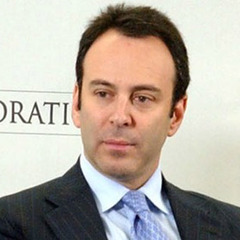
Edward Lampert
Businessman -

Eugene Fama
Economist -

George Soros
Business magnate -
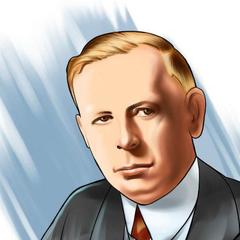
Jesse Lauriston Livermore
Stock trader -
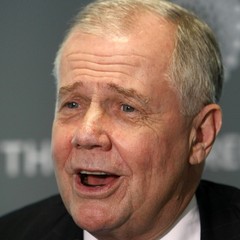
Jim Rogers
Investor -

Joel Greenblatt
Manager -
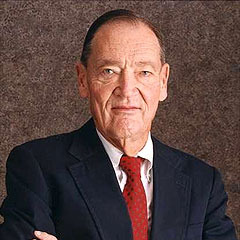
John C. Bogle
Investor -

John Templeton
Investor -
Kenneth Fisher
Manager -
Philip Arthur Fisher
Author -

Seth Klarman
Author -

Warren Buffett
Investor -

James O'Shaughnessy
Author